Test

🌙 Moon phase

The moon phase on the day you were born — only eight possible results.
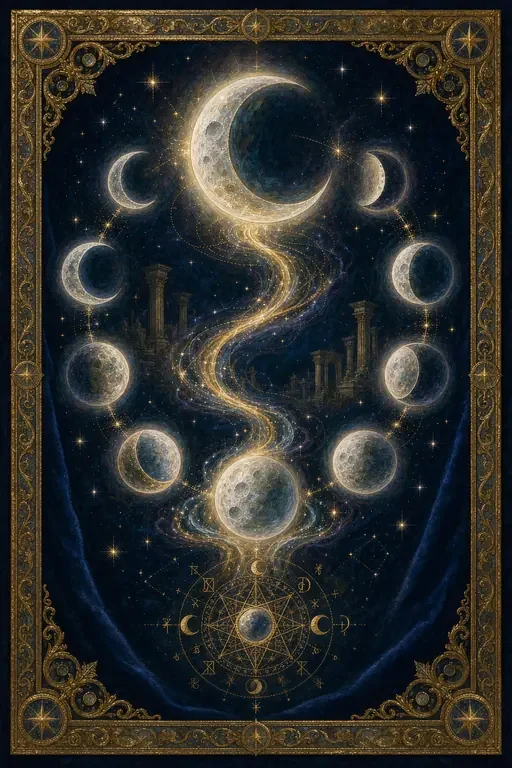
The eight moon phases

The moon phase tells you a position, not a personality score. None of the eight is better than another.

Frequently asked questions

Does wishing at the new moon really work?

More precisely, the new moon gives you a fixed moment at which you clarify what you want. The writing itself does not create an outer force — what actually works is that you turn a blurred thought into a concrete sentence; after that it becomes easier every day to recognise suitable opportunities. If you put the note in a drawer after writing it and never look at it again, it is only a piece of paper.

Why am I so unusually listless precisely at the new moon?

That has little to do with your ability. In this phase the cycle has the least light, and subjective feeling often swings with the surroundings. Most people experience one or two days of lower drive around the new moon — it usually returns by itself with the waxing crescent. If the state lasts a long time and affects everyday life, that goes beyond the lunar cycle and deserves to be approached from another angle.

Is it suitable to begin something new at the new moon?

Beginning fits, finishing does not. You can start, sign up, write a plan and take the first step — but do not set yourself a delivery date in this phase. The new moon gives direction and permission; real work in fullness happens later at the waxing moon. Whoever reverses the order often finds that strength fades in the middle of the cycle.

What if I am very busy at the new moon, or not feeling well physically?

The moon-phase model is for orientation, not obligation. If you are busy, skip the ritual and catch up on the next free day — a difference of one or two days hardly matters. When in doubt, a light version you can keep up over the long run is far more useful than one perfectly performed ritual. If you are not well physically, look after yourself first — that matters more than any exercise.

Moon phase guide

🌑 New moon

The moon stands between the sun and the earth, its lit side turned completely away from us, and it cannot be seen in the night sky. This is the beginning of a cycle.

You are on day zero to one of a lunar cycle about twenty-nine and a half days long — almost exactly at the starting point. Right now the moon rises and sets together with the sun: during the day it is in the sky but outshone by sunlight, and at night it is not visible at all. About fifteen days have passed since the last full moon, and about fifteen remain until the next — almost equal on both sides. The energy sits at the lowest point of the whole curve, and exactly here is also the turning point: from this moment the light grows a little more each day. It is the only place in the entire cycle where things can only go upwards — and at the same time the place where least is expected of you.

Well suited are things that do not yet have a form: write down one thing you vaguely want to do and have never even admitted to yourself; give a long-neglected thought a page of paper; turn a vague wish into sentences you recognise as your own. This is also a good time for clearing out: delete photos you no longer need, leave group chats you no longer read, tidy a corner where things have piled up. The new moon is about empty space, so that the coming days have something to fill. If you cannot think of what to write, start with what you do not want: working backwards is often faster than working forwards.

The most common mistake: taking the new moon for a time when you ought to be full of drive right away. Many people notice that they do not want to do anything in this phase, conclude laziness or a bad state, and start reproaching themselves — which uses up exactly the energy that is scarce anyway. In fact the new moon is the moment with the least light in the cycle; low drive belongs to this position and has little to do with your ability. Using these days for empty space and impulses brings considerably more than forcing yourself up.

🌒 Waxing crescent

The moon shows a fine silver crescent in the night sky again, and the lit part grows larger every day — the direction is already visible.

You are on day one to six of the cycle. The moon has moved a little away from the sun: after sunset a fine crescent can be seen low in the west, but it follows the sun into the horizon soon after — the window to see it is short. About one to six days have passed since the new moon, and about nine to fourteen remain until the next full moon. The energy clearly rises, and this increase is the most noticeable in the whole cycle — because it goes from almost nothing to something, and precisely such changes stand out most. So what you need most on these days is not more strength but quicker feedback — a single response is enough.

Now the first step fits: send the first email, run the first three kilometres, build a first rough version, tell the first person about your idea. Equally suitable is gathering feedback from outside — ask friends what they think, send out the half-finished result, go and look for yourself. On these days you can also block out a concrete time slot for your new-moon matter — do not stay at the planning level. Another high-value step: getting back in touch with people you have not heard from in a long time. A simple greeting finds noticeably more resonance in this phase than usual.

Most often the slowness of the waxing crescent is misunderstood as one's own failure. The whole phase lasts only three to six days; the sample is far too small to decide whether something holds. What the waxing crescent really wants is a fingertip in the water — not a finished performance review. Hold back the verdict on success or failure until the first quarter; by then you have enough evidence. Slow does not mean unsuitable — that is the most important reminder of this phase.

🌓 First quarter

The moon is exactly half lit, the right side shining — it hangs in the evening sky like a half-opened fan.

You are on day six to nine of the cycle, roughly at the first quarter of the whole round. The first quarter rises around midday and sets around midnight; in the evening hours it hangs high in the southern sky — the best moment of the day to find it. About seven days have passed since the new moon, and about seven remain until the next full moon — mirror-symmetrical on both sides. The energy is clearly on an upward trend and has just passed its first turning point: you have gathered practical experience, but half the distance to the summit is still ahead.

Now weighing up fits: dropping the path that is not walkable, cutting a project back to the scope you can handle, declining a commission you do not actually want, clarifying a vague division of tasks. Equally suitable is structural tidying — putting chaotic processes into an order, sorting scattered material, recording responsibilities in writing. On these days leaving things out brings considerably more than adding, because your time is getting tight. It also fits well to put verbal agreements into a document; what is written down will not be reinterpreted over and over later.

Most often the irritability of the first quarter is read as a genuine judgement about other people. On these days your tolerance drops; everyone seems inefficient and indifferent. But part of this fire belongs to the moon phase and not to the people. Postpone your judgement about others for two days — most assessments soften by themselves. If the opinion still holds after two days, it is worth taking seriously. And you may also read it as a hint: you are too tense right now — time to loosen up a little.

🌔 Waxing gibbous

The moon is more than half lit and growing rounder — step by step it approaches its fullest moment.

You are on day nine to thirteen of the cycle. The moon rises in the afternoon and sets in the early morning hours; by dinner time it already hangs in the eastern sky, the bright area clearly exceeds half, but an arc of shadow remains at the edge. About nine to thirteen days have passed since the new moon, and only two to six remain until the full moon. The energy keeps rising and has entered its acceleration phase — the position closest to the summit and at the same time the best return for your effort. The biggest risk of these days is not that things move too slowly, but that you open too many building sites at once — and around the full moon discover that you cannot finish a single one.

Now everything that needs sustained effort fits: pick up speed, finish the main work, polish a version repeatedly, raise the training intensity one level. Equally suitable is completing — repairing rough spots from earlier days, turning the half-finished into something presentable, cleaning the details at the edges. Also good: showing intermediate states to the outside and gathering a first round of feedback before the full moon — that leaves time to change, and you do not have to deliver the final version under pressure at the full moon. If you are ahead of schedule, put the time you gained into the final check instead of squeezing in another task.

Most often the high capacity of the waxing moon is read as proof that you can expand as much as you like. Yes, you are capable on these days and progress is visible — but the energy is approaching its peak, and afterwards it goes downhill. New building sites opened in this period are usually quietly abandoned around the last quarter — and they have consumed exactly the reserve you would have needed to finish. The clever move is to put the whole capacity of these days into completion and fine-tuning rather than widening the fronts.

🌕 Full moon

The moon is fully lit and visible all night — the moment with the most light in the whole cycle, and at the same time a turning point.

You are on day thirteen to sixteen of the cycle — in the middle of the whole round. The full moon rises in the east at sunset and sets in the west at sunrise; it hangs in the sky all night. About fifteen days have passed since the last new moon, and about fifteen remain until the next — perfectly symmetrical. The energy stands exactly at the highest point: behind you lie half a waxing, ahead of you half a waning. It is the only place on the curve where every path leads downwards — and the only one from which you see beginning and end at once.

Now completing and confirming fits: hand over a project, close a phase, say publicly what you have achieved, draw a serious balance of the fourteen days. Equally suitable is letting go: write down what you no longer want to carry with you and dispose of the sheet in a way that suits you. And celebrate — properly and with seriousness, even if only by inviting yourself to something good or telling a person about what has been finished. Saying it out loud and merely going through it inwardly are two completely different experiences; this step tends to be skipped, yet five minutes are well invested.

Most often the full moon is inflated into a day on which one must celebrate grandly or perform a ritual. In truth the core movement of the full moon is seeing and letting go — not celebrating, and no procedure is needed. A second misunderstanding: taking the strong feelings of the full moon directly as truth. These days amplify the intensity of experience — that does not automatically mean the matter is equally grave. A look on the next day often leads to a different verdict.

🌖 Waning gibbous

After the full moon the bright face shrinks from the right side — but more than half still glows; the light is drawing back slowly.

You are on the sixteenth to twentieth day of the cycle. The moon rises in the evening and sets in the morning; in the first half of the night it stands in the eastern sky — the lit face has clearly lost a stretch, but still shines for the most part. About one to five days have passed since the full moon, and about nine to fourteen remain until the next new moon. The energy is heading down, but the water level is still high — this is the first stretch after the summit, and its mark is reserve: you can still work well, only no new building sites belong in it. See this position as one where you pass something on rather than earn something more — then it runs far more smoothly.

Now is the fitting time to pass on and give back: write down and share your experience, teach a colleague a trick, send a concrete thank-you to someone who helped you, give away what you no longer use. Review and tidying suit it equally: archive project files, look through the notes of this period once, turn what you learned into a reusable method. Light sociability also does you good these days — meet people without a goal, talk about something that has nothing to do with work, and let the tense state of the last fourteen days soften.

The small emptiness of the waning gibbous is most often read as a sign of a problem. The peak of the full moon lies just behind — the ebbing of excitement is a natural process, not a loss of drive and not confirmation that the last fourteen days were wasted. A second misunderstanding: to believe one can keep sprinting these days. That consumes the reserve — and by the last quarter you are noticeably slowed. Allowing yourself to be slow these days is the earned close of the last fourteen days — entirely without a bad conscience.

🌗 Last quarter

The moon is again only half bright — this time the left side is lit; the light is clearly fading, the ebb is half way through.

You are on the twentieth to twenty-fourth day of the cycle. The last quarter rises around midnight and sets around noon; from the second half of the night until morning it is visible in the sky, the bright side facing left. About seven days have passed since the full moon, and about seven remain until the next new moon — the midpoint of the shrinking phase. The energy is in the middle stretch of the descent, and that is exactly what makes this position the best of the whole cycle for clearing out — like an ebb tide half way through: on the tidal flat everything lies open, nothing can hide any longer. Having withdrawn this far, now is exactly the right moment to take stock — what is otherwise covered by water lies before you at a single glance.

Now clearing out fits: delete bookmarks you no longer look at, leave groups you no longer take part in, throw out the stuff that piled up over half a year, end a collaboration that should have ended long ago, strike appointments you keep up only out of politeness. Exercises in forgiving suit it equally — write a letter that will not be sent, pour the resentment about a person into it, and then dispose of the sheet. These days also reward a thorough check of finances and subscriptions: switch off the silent, steadily draining items. When clearing out you can set yourself a time limit — fifteen minutes and then stop, so you do not sink into memories.

The clear pain of the last quarter is most often declared a problem that must be solved immediately. Seeing something clearly hurts — and that pain is itself part of the processing; you do not have to press it away hastily with action. Hasty action easily leads to exaggerated decisions. A second misunderstanding: to confuse letting go with giving up. To decide consciously to let something go is judgment, not failure. And when it is done: give yourself a little time — you do not have to prove to anyone that this decision was right.

🌘 Waning crescent

Only a fine sliver of the moon is left in the eastern morning sky; soon it will vanish completely — the cycle has reached its last station.

You are on the twenty-fourth to twenty-ninth day of the cycle. The waning crescent rises during the night and is visible in the daytime too; before dawn it shows low in the east as a fine sliver curved to the left — as soon as the sun rises it is gone. The full moon lies eight to fourteen days back, and only one to six days remain until the next new moon. The energy stands at the lowest point of the curve — as low as at the new moon, yet its nature is entirely different: the new moon is an empty beginning, nothing has happened yet; the waning crescent is a full completion, everything has been lived through.

Now things with low consumption and a lot of permission fit: sort the notes of this month, leaf through old photos, take a walk without a destination, read a light book, jot down the thoughts of these days in passing. There is time for recording dreams, too: put a notebook by the bed and write three lines after waking — whether you understand them is not the point, only that they are written down. And a light monthly review fits: on which days were you at your best, on which the hardest, and does a pattern show between them?

The tiredness of the waning crescent is most often read as a step backwards of your own. It is only the usual reaction at the end of a month of accumulated consumption; most people recover by themselves with the new moon. Whoever doubts this does themselves an injustice. A second misunderstanding: to believe one must still achieve something these days so as not to waste anything. In truth, completion and rest are exactly the right solution of this position; biting through only burdens the opening of the next cycle. To live these days well is the best preparation for the coming cycle.

Related reading