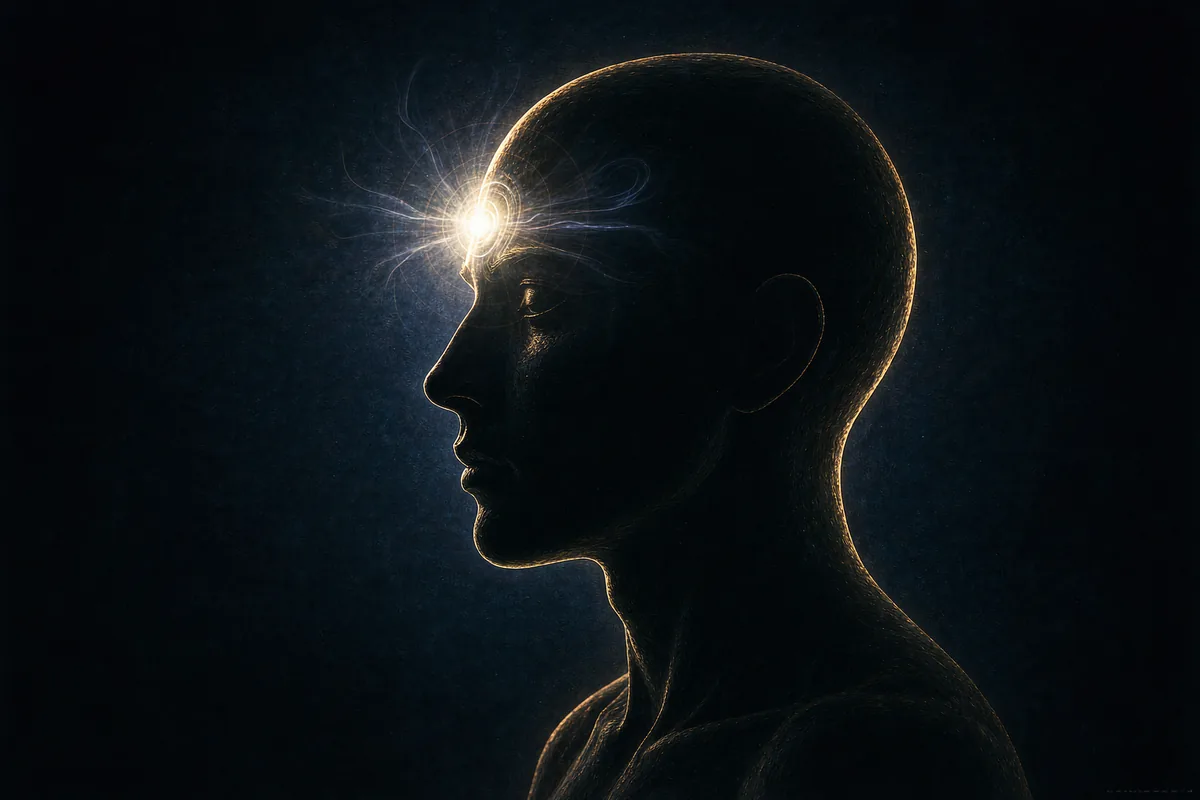
The third eye (Ajna) is the gateway to higher intuition and spiritual perception. When it is open you can perceive information beyond the five senses — future possibilities, the true intentions of others, the energy patterns behind events.
Six exercises
1. Touch the Ajna point — press the point between your eyebrows for 30 seconds twice a day.
2. Candle meditation — gaze into a flame for 5 minutes, then close your eyes.
3. Visualisation — visualise a red apple with all your senses for 5 minutes a day.
4. Dream journal — write down your dreams immediately on waking.
5. Intuition games — guess before you read the message.
6. Violet food — blueberries, red cabbage, grapes; an amethyst while you meditate.
A word of caution
Do not force the third eye open. If you get headaches or anxiety, ground yourself first — walk barefoot, eat grounding food.
These exercises are suggestions for self-observation and not a medical or therapeutic recommendation; if symptoms persist, please consult a professional.
Frequently asked questions
How long does it take to open the third eye?
There is no fixed timeline, and this page will not promise one. The six exercises are short daily practices, not a switch. Most accounts describe weeks to months of steady practice before anything feels different, and some people notice nothing at all. That is a normal outcome, not a failure.
How often should I do the exercises?
Two short sessions a day is enough: 30 seconds on the Ajna point, plus one exercise of your choice for about five minutes. Consistency matters more than length. If you catch yourself extending the practice because you are waiting for a result, that is a good point to stop for the day.
Is opening the third eye dangerous?
Nothing here can physically open or damage anything. The realistic risks are ordinary: strained eyes from candle gazing, a sore spot if you press the brow too hard, and lighter sleep if you practise late. The warning that matters is about intensity — do not turn five minutes into an obsession. If you have a history of anxiety or dissociation, treat this as entertainment rather than therapy, and speak to a professional first.
How do I know my third eye is open?
You cannot know, and this tradition does not ask you to. The usual signs — vivid dreams, pressure between the eyebrows, sensing something shortly before it happens — are also produced by tiredness, coincidence and plain attention. A more useful question is whether the practice changes what you do: whether you pause before answering, or trust a first impression. That is observable. A sign is not.
Is the third eye the same as the Brow chakra?
In practice, yes. The Brow chakra (Ajna) is the sixth of the seven chakras, and third eye is the older and more popular name for the same point between the eyebrows. The chakra test further down this page walks through all seven, if you want to see where it sits in the system.
Do I need crystals, special food or a diet?
No. The sixth exercise mentions an amethyst and violet food because those links are traditional, not because they are required. No crystal? Do it without one. Food plays no part beyond ordinary eating, and nothing on this page is a substitute for medical care.
Can I close it again if it feels like too much?
Yes. Stop the exercises and follow the advice already on this page: ground yourself first — walk barefoot, eat something plain, sleep. Nothing here is irreversible, and there is no ritual you must finish. If unease lasts more than a few days, that is a reason to talk to a professional, not to push further.
 Reiki for Beginners: What Universal Life Energy Means
 The Seven Chakras: The Complete Guide from Root to Crown
 Synastry: How Two Charts Draw a Love Map